

Bangladesh at Risk from Climate Change: Urgent Call for Integrated Action to Protect Population and Health
Bangladesh is one of the world’s most vulnerable countries to the effects of global climate change. A recent report has found that Bangladesh is facing serious disasters due to the dual pressures of high population density and climate change, which have put the country’s public health and livelihoods at extreme risk.
The Population Institute has published this new report in the face of the extreme adverse effects of climate change worldwide. The report, titled “Population and Climate Change Vulnerability: Understanding Current Trends to Enhance Rights and Resilience” (2026 Edition), shows that the population growth rate in 80 countries at risk from climate change is double the global average (1.6 percent).
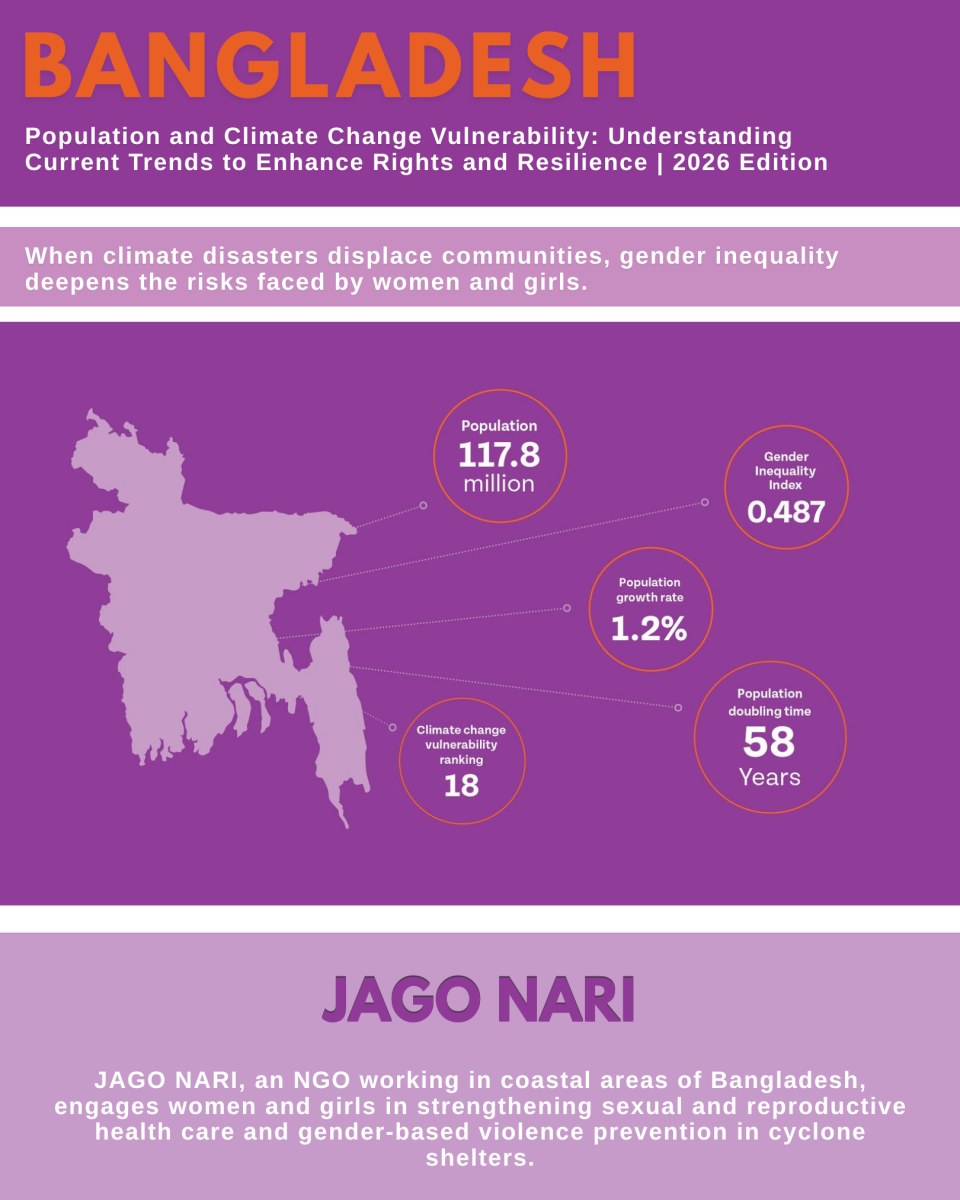
JAGO NARI provided information on the coastal areas of Bangladesh in the report.
Other Countries
The report highlights case studies of five countries that are taking innovative steps to combat climate change. Niger is the world’s second most climate-vulnerable country, with high temperatures and droughts hampering agricultural production. JVE Niger advocates for the inclusion of youth and children’s voices in climate policy. The Philippines experiences an average of 20 cyclones a year. PATH Foundation Philippines Inc. is working to integrate gender equality and reproductive health services to build coastal resilience. Uganda’s Regenerate Africa is working to build climate resilience. The United States has research and initiatives on the resilience of campuses to the impacts of climate change and its social risks.
Risk profile: Cyclones and displacement
According to the 2026 report, Bangladesh is one of the most densely populated countries in the world, with about 3,500 people per square mile. Although only 1 percent of the world’s cyclones hit Bangladesh, they account for 53 percent of the global cyclone-related deaths. Sea level rise and salinity are destroying freshwater sources and agricultural land in coastal areas. Bangladesh is expected to lose 11 percent of its land area and displace 18 million people by 2050 due to a sea level rise of about 19.6 inches.
The report identifies Bangladesh as one of the most climate-vulnerable and densely populated countries in the world. Women’s safety and health risks increase during climate-related disasters. There is evidence of an increase in child marriage and gender-based violence in the aftermath of disasters.
Gender-based risks and public health disasters
Women and adolescents in Bangladesh are the most affected by the impact of climate change. Women’s access to healthcare is hampered during disasters, which puts their reproductive health and dignity at risk. Many women and adolescents are subjected to inhumane conditions due to the lack of essential reproductive health supplies and confidentiality during disasters. The report reveals that in many cases, women are forced to resort to unsafe methods to prevent unwanted pregnancies or stop their periods, which increases their long-term health risks. In addition, the rates of child marriage and gender-based violence are also increasing at an alarming rate due to poverty and loss of livelihood.
JAGO NARI and integrated initiatives in the solution
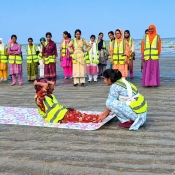
The report highlights the activities of an organization called ‘Jago Nari’ (JAGO NARI) in the coastal region of Bangladesh as a successful model in climate adaptation. Through their activities, the organization:
Provides special corners and necessary materials for menstrual health management (MHM) in cyclone shelters and schools.
Ensures emergency services for pregnant and lactating mothers.
Regularly advocates with local administrations to build gender-sensitive infrastructure (such as separate toilets, adequate lighting and security) during disasters.
Working to develop the leadership of adolescent girls and young women and raise awareness about reproductive health and rights.
What’s next?
Experts say that to make Bangladesh’s climate adaptation plans more effective, infrastructure development alone is not enough. It must also integrate gender equality, reproductive health and rights, and population issues. It is now time to scale up these innovative grassroots initiatives for a sustainable future.
//JN NewsRoom/10072026//
Published on: Friday, 10 July 2026, 06:56 pm ▪ Last update: Friday, 10 July 2026, 06:59 pm ▪ Total View of this Page: 235