

Café Dialogue in Dhaka: Call to prioritize coastal women’s crisis and find solutions
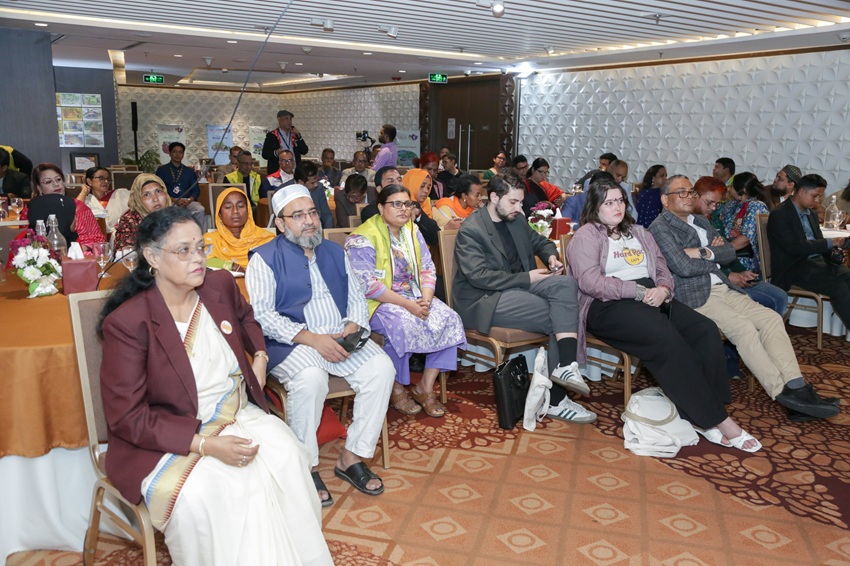
Dhaka, December 17, 2025: Speakers at the Café Dialogue titled ‘Coastal Women’ called for prioritizing solutions to the crisis of marginalized coastal women. Representatives from various donor agencies, government departments, UN, INGOs, local government representatives, and coastal women discussed the crisis of coastal women in the dialogue. They showed ways to solve the problem and pledged their participation in the development of coastal women.
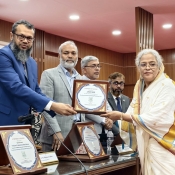
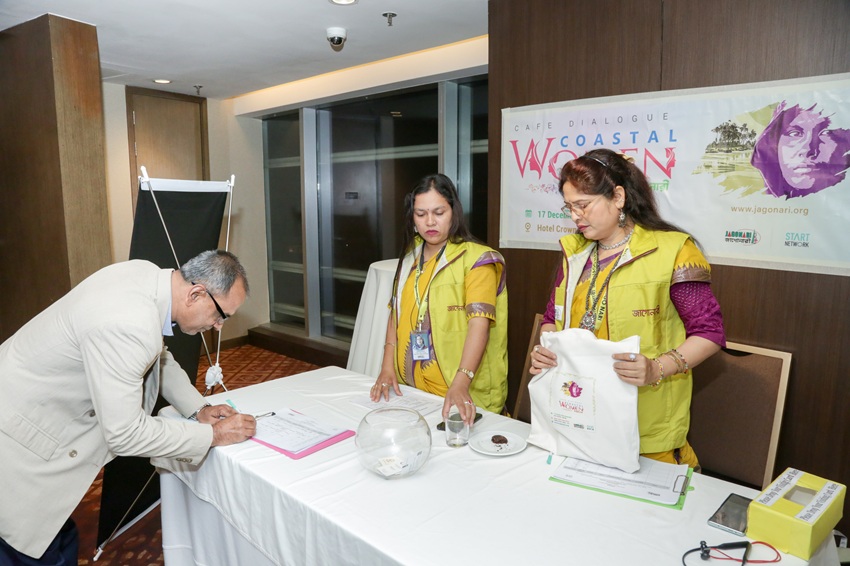
NGO JAGO NARI organized this exceptional Café Dialogue in supported with Start Network Solidarity Fund at Crown Plaza in Gulshan, Dhaka on Wednesday evening, December 17.
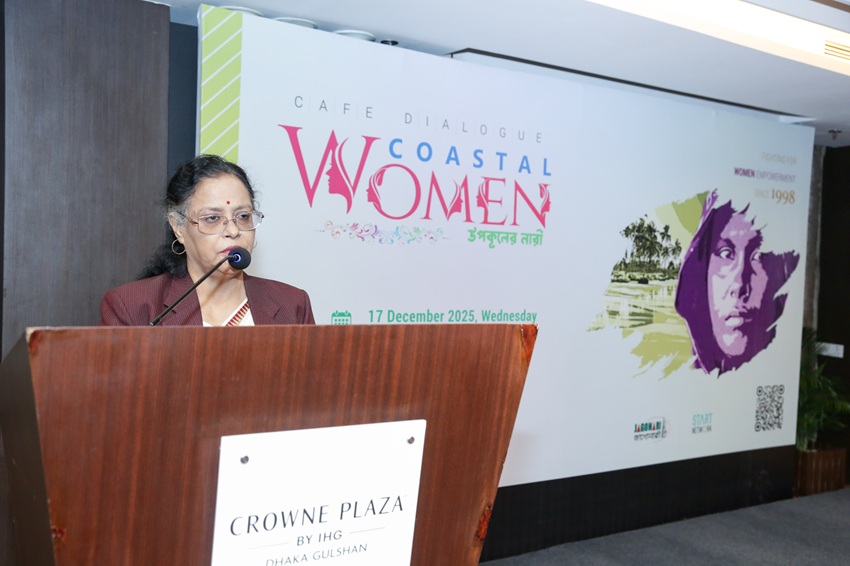
At the beginning of the program, JAGO NARI’s CEO Hosne Ara Hasi highlighted various problems as a coastal woman through his welcome speech. These include education, health, WASH, agriculture, embankments, domestic violence, etc. He became emotional while talking about losing his four siblings in the 1960 cyclone and tidal wave. He narrated the story of JAGO NARI, which he had built for 27 years from 1998 to 2025.
Professor Dr. Ahmed Parvez, Head of the Department of Environmental Science at Patuakhali University of Science and Technology, shed light on various problems of coastal women based on his research findings. He said that JAGO NARI is working with us to solve various problems of coastal women and conduct various research activities.
The people of the country of water are suffering from water crisis, said Duke Ibne Amin, Director of JAGO NARI. He said that 70 percent of the tube wells in Barguna have become useless. The water layer has gone down a lot. Currently, water is available at 1100-1200 feet. He emphasized the importance of purifying pond water and using rainwater. He emphasized on vocational training for youth and women, education of dropout children, pre-primary education. He called for the development of digital curriculum, communication in remote char areas and healthcare.
Laily Akhter, a coastal female fisherman, told the story of her life struggle at the meeting. She said that although she wanted to study in a family of poverty, she could not do it. I joined the work of fishing in the river and sea to visit my sick parents. But there too I faced many problems and discrimination. As a woman, when I sell fish in the market, I get less than 100-150 taka per kg. Currently, the fish in the river has decreased a lot. Therefore, I have to work as a laborer in people’s homes. She appealed to everyone for alternative employment for coastal women.
Shefali Begum, a woman from the Manta community, told the story of her life struggle. She said, Born in the river, died in the river, married and had a family in the river. We make a living by fishing. We do not get any government facilities. People do not look down on us. When someone dies, there is no place to bury them. Many times, bodies have to be floated in the river. We tie children to boats and go fishing. We have no opportunity for education for our boys and girls. We need schools. The fish in the river have decreased. If we can arrange some other work for us, we will be better off.
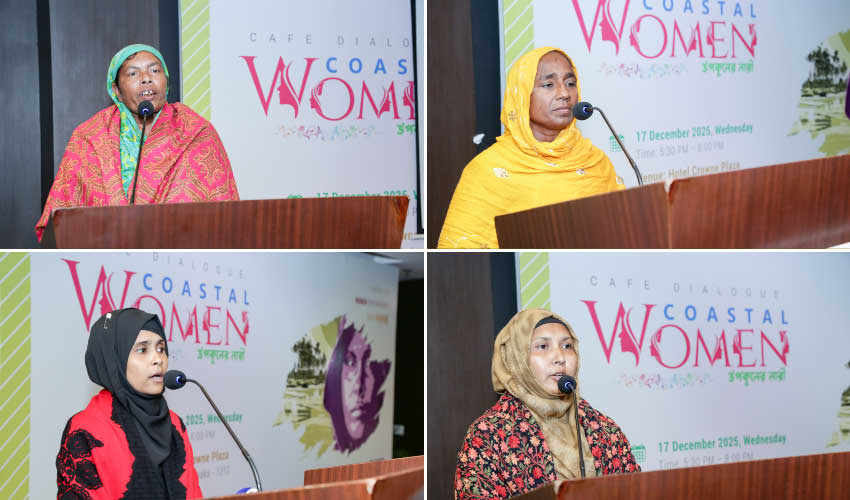
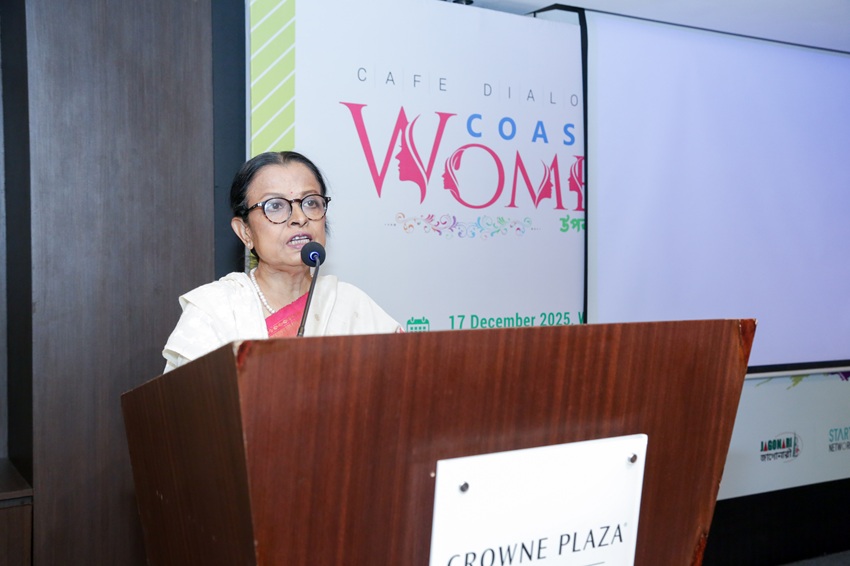
Kulsum Begum, a representative of a local community organization, discussed the health and nutrition of women and children in the coastal areas. She said, I got married at a young age. I gave birth to a malnourished child and after 6 years my child died. The quality of services at the community clinic needs to be improved, and the manpower needs to be increased. She said, people need to be made more aware of health and nutrition, and so that no child dies due to malnutrition.
Local government representative Halima Begum said, I grew up in a house on the banks of the Payra River and the Bay of Bengal. I have been elected as a reserved member of the Union Parishad at this stage. I have to face a lot of discrimination in my work. She emphasized the importance of project implementation and coordination through the Union Parishad for all government and non-government organizations.
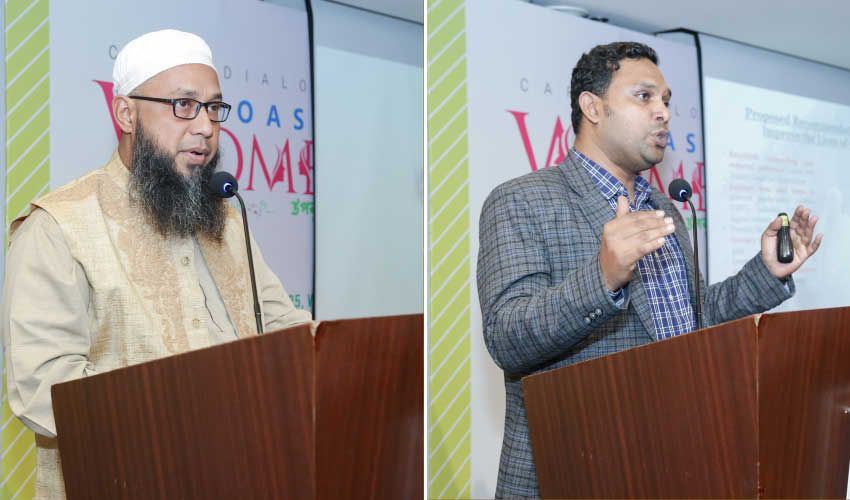
Prof. Dr. Ahmed Parvez, Chairmen, Dpet of Environmental Science, PSTU and Md. Duke Ivn Amin, Director Communication, JAGO NARI gave a presentation on Challenges and way forward of costal women in the dialogue.
Those who discuss in the dialogue are, Dr Mohammad Assaduzzaman, Senior Policy advisory-climate, Embassy of the Kingdom of Netherlands, Md. Mostak Hussain, Director - Humanitarian, Save the Children in Bangladesh, Shofiul Alam, Country Manager, Start Network, Md. Enamul Kabir, PD, LGED, Mohammad Fhakrul Islam, Organizational Strengthening Advisor, Start Network, Emebet Menna, Deputy Country Director - Program, Care Bangladesh, Bartin Gomes, Managing Director, Good Neighbors Bangladesh, Shabira Nupur, Head of Advocacy and Communication, IRC, Monoar Alim, Relationship Manager, Bkash, Golam Rahmani Quraishy (Sajal), Project Specialist, Right to Grow Consortium, Rowson Ara Project Director Naripokkho, Shah Afzal Ahmed, Consultant.
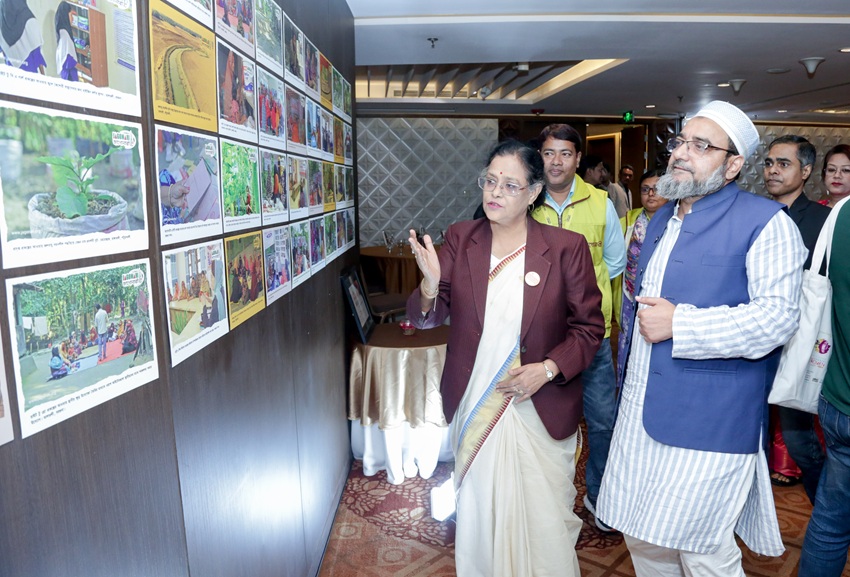
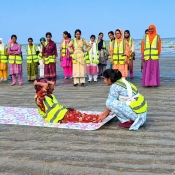
The Café Dialogue program presented stills and videos of the life struggles of coastal women.
Former District and Sessions Judge Roxana Benju, a member of the Advisory Council of JAGO NARI, concluded the program by expressing gratitude and thanks.
//Newsroom/Jagonari//
Published on: Thursday, 18 December 2025, 11:40 pm ▪ Last update: Friday, 19 December 2025, 07:47 pm ▪ Total View of this Page: 673